
 NEW
NEW
Pinnertest 120
120 Foods
$199
PDF Report

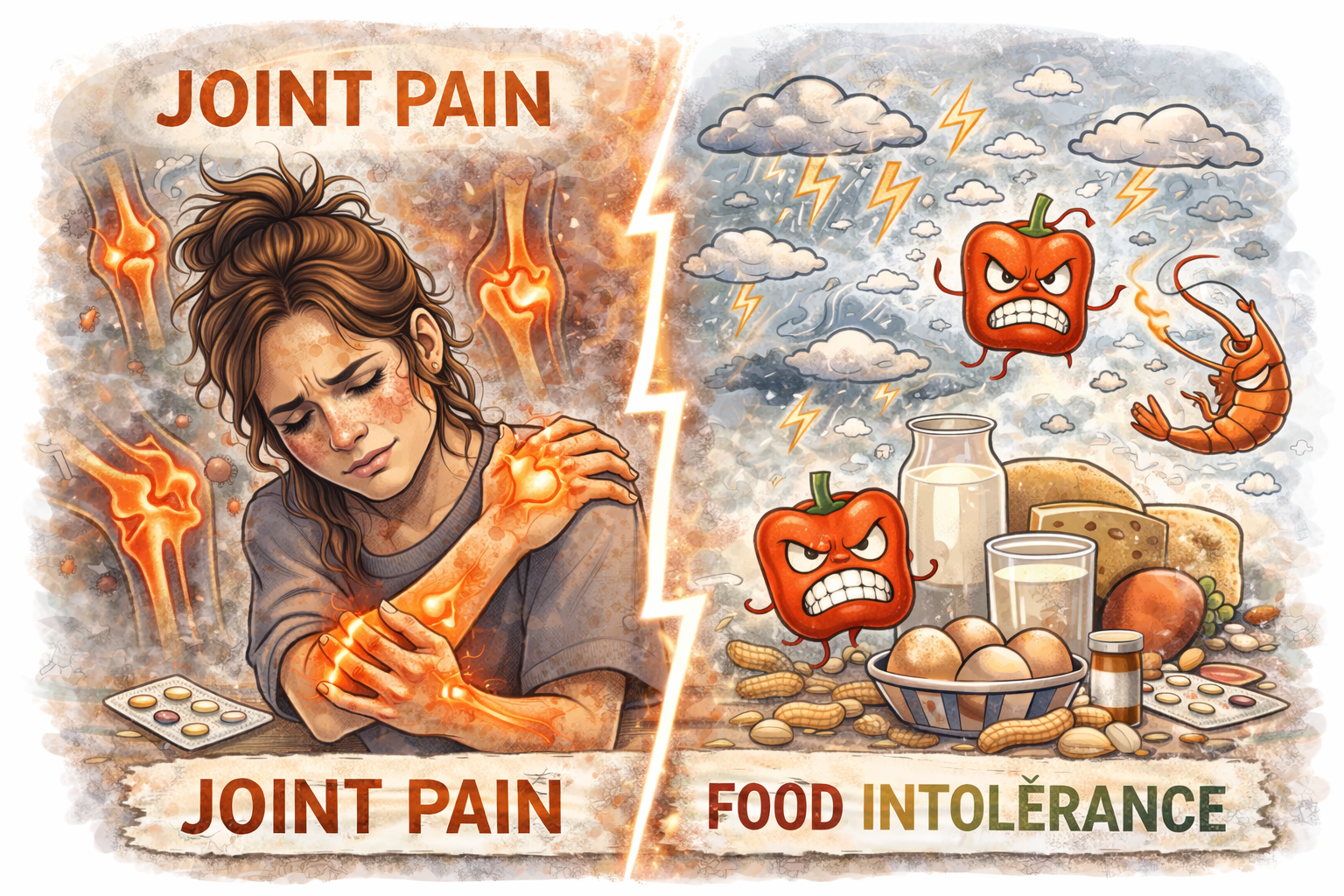
If your joints feel stiff in the morning, ache after meals, or flare in cycles that feel “random,” food-related inflammation may be one part of the bigger picture. Delayed IgG food sensitivities may contribute to low-grade, whole-body inflammation that overlaps with joint pain, swelling, or tenderness—often alongside digestive, energy, or mood symptoms.
Delayed timing
Symptoms may appear hours to days after eating (often 8–72 hours).
Whole-body overlap
Joint pain may appear alongside gut + energy + mood symptoms.
Reduce guesswork
Testing helps you identify what’s worth investigating—without generic lists.
Joint pain can come from injuries, overuse, arthritis, autoimmune conditions, infections, and many other causes. But some people notice a repeatable pattern where joint symptoms worsen around food exposures.
Why it’s confusing: IgG-related reactions can be delayed 8–72 hours, so flare-ups may feel random—even if food is one contributing factor.
When food sensitivity is involved, the immune system may create a sustained inflammatory response after certain foods. Over time, that inflammation can influence pain sensitivity and joint comfort—especially when other symptoms occur at the same time.
“Heavy body” days and energy crashes alongside chronic fatigue.
Inflammation patterns overlapping with headaches or migraines.
Joint symptoms vary widely. The signal to look for is whether joint discomfort appears alongside other body-wide symptoms and fluctuates in a delayed timing pattern.
Joint pain can also be unrelated to food. The goal is not to assume food is always the cause—it’s to use better data (tracking + testing) to understand your personal pattern.
There is no universal list of “common trigger foods.” Any food can be the problem for the right person, and delayed timing makes correlation difficult without objective data.
The Pinnertest Food Sensitivity Test measures IgG reactions to 200+ foods, helping you identify which foods produced the highest reactions in your results.
Learn more: How IgG Food Sensitivity Testing Works and IgG vs IgE.
If you suspect food may be contributing, the most useful approach is to reduce guesswork and collect clean data. Start with tracking and pair it with testing.
Key takeaway: Because any food can be a trigger and symptoms may be delayed, the most reliable way to identify your foods is an IgG food sensitivity test reviewed with your healthcare provider.
Important: Pinnertest does not diagnose arthritis, autoimmune disease, or any condition. Joint pain should be evaluated by a healthcare professional to rule out other causes.
PINNERTEST IGG FOOD SENSITIVITY PANELS
All panels use the same CLIA-certified laboratory. Select the number of foods and level of online portal access that fits your needs.
Order your chosen panel, collect a quick at-home blood spot sample, mail it to our CLIA-certified lab, and receive your detailed IgG results by email in about 7 days.
NEW
120 Foods
$199
PDF Report
200 Foods
$249
Limited access to portal
(Online Report, Food Details, FAQ)
NEW
250 Foods
$349
Full access to portal
(Online Report, Food Details, Label Scanner,
Custom Recipe Generator, AI Assistant, FAQ)