
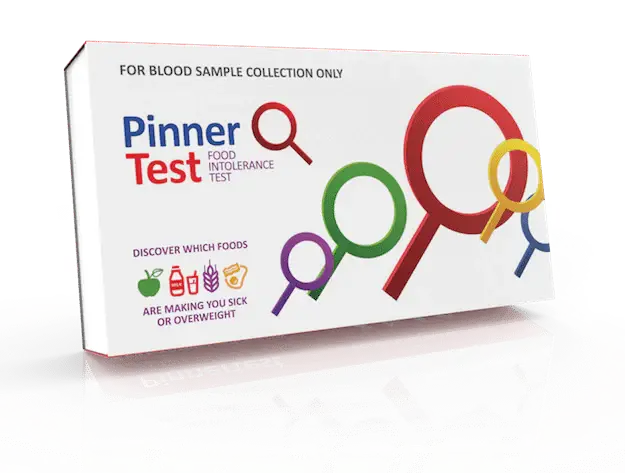
 NEW
NEW
Pinnertest 120
120 Foods
$199
PDF Report

If weight management feels unusually difficult—even with consistent habits—hidden IgG food sensitivities may be one possible factor for some people.
Delayed reactions can overlap with symptoms like digestive discomfort, fluid retention, fatigue, and cravings that may make consistency harder.
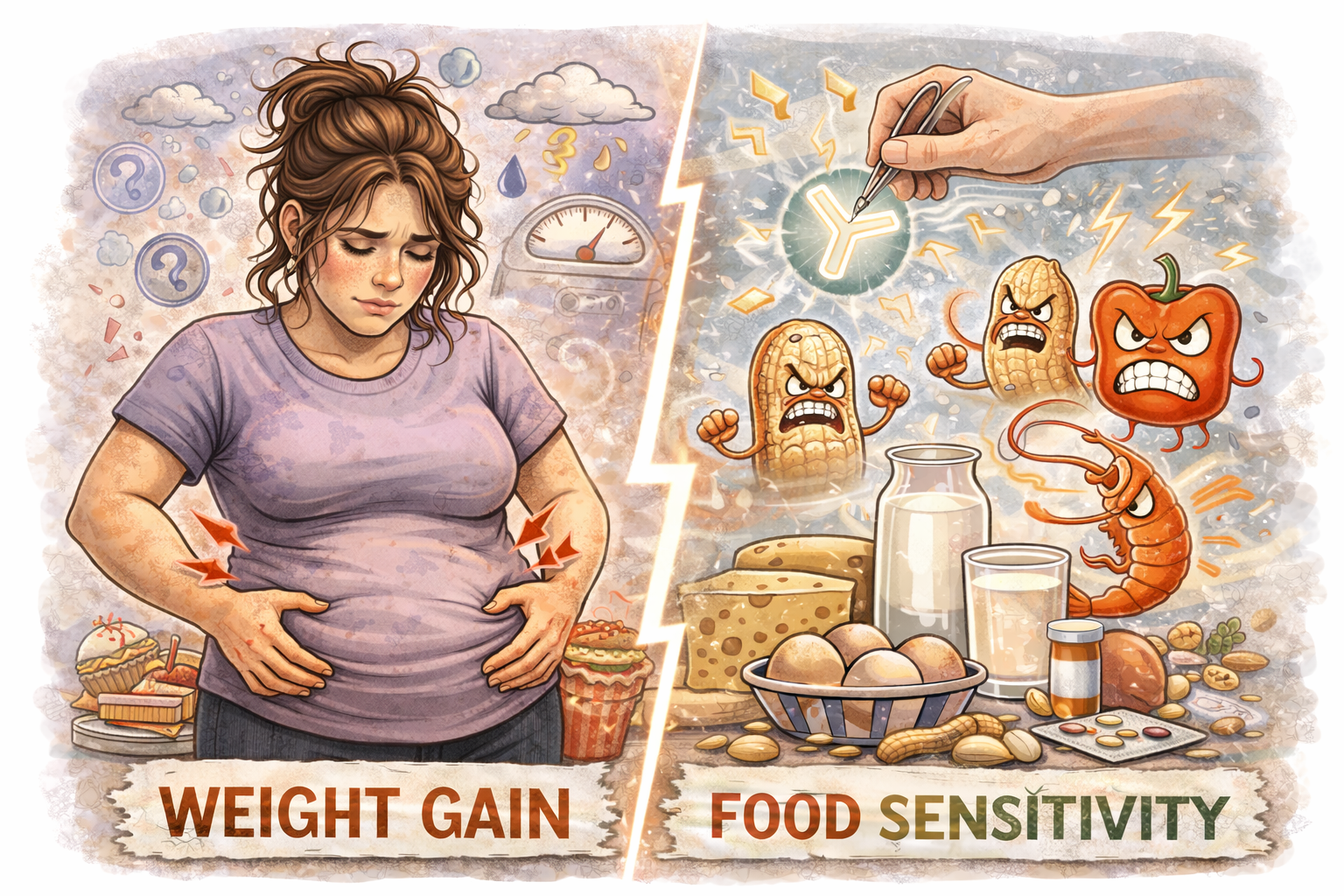
Weight changes are influenced by many factors—not only “calories in vs calories out.” In some people, food sensitivity may be associated with immune activity that overlaps with symptoms such as digestive discomfort, fatigue, and appetite changes.
Because reactions can be delayed, it may be difficult to connect a specific meal with next-day symptoms. Tracking patterns and reviewing personal data can be more useful than guessing.
Why this can be confusing: IgG-related symptoms may occur 8–72 hours after eating. People often don’t connect what they ate yesterday with how they feel today.
Some people report puffiness or digestive discomfort during symptom flares—sometimes mistaken for fat gain. Related: bloating.
Fatigue may affect appetite cues and daily activity patterns, which can influence eating consistency. Related: chronic fatigue.
Some people notice stronger cravings during symptom flares—especially for sugar or refined carbs. Related: sugar & carb cravings.
Learn more: What Is Food Sensitivity? and What Causes Food Sensitivity?.
Some people report a repeating pattern: a trigger food may lead to delayed gut symptoms, symptoms may overlap with stronger cravings, and cravings can make it harder to maintain consistent habits.
This doesn’t mean food sensitivity is the only cause of weight changes—just that it may be one factor worth investigating if you notice a repeating pattern.
Quick fact: Roughly 90% of the body’s serotonin is located in the gastrointestinal tract, where it is produced and regulated by specialized gut cells.
While gut serotonin is not the same as brain serotonin, gut irritation or inflammation may influence serotonin-related pathways and nervous system signaling. Some people report this overlaps with low mood and stronger cravings during symptom flares.
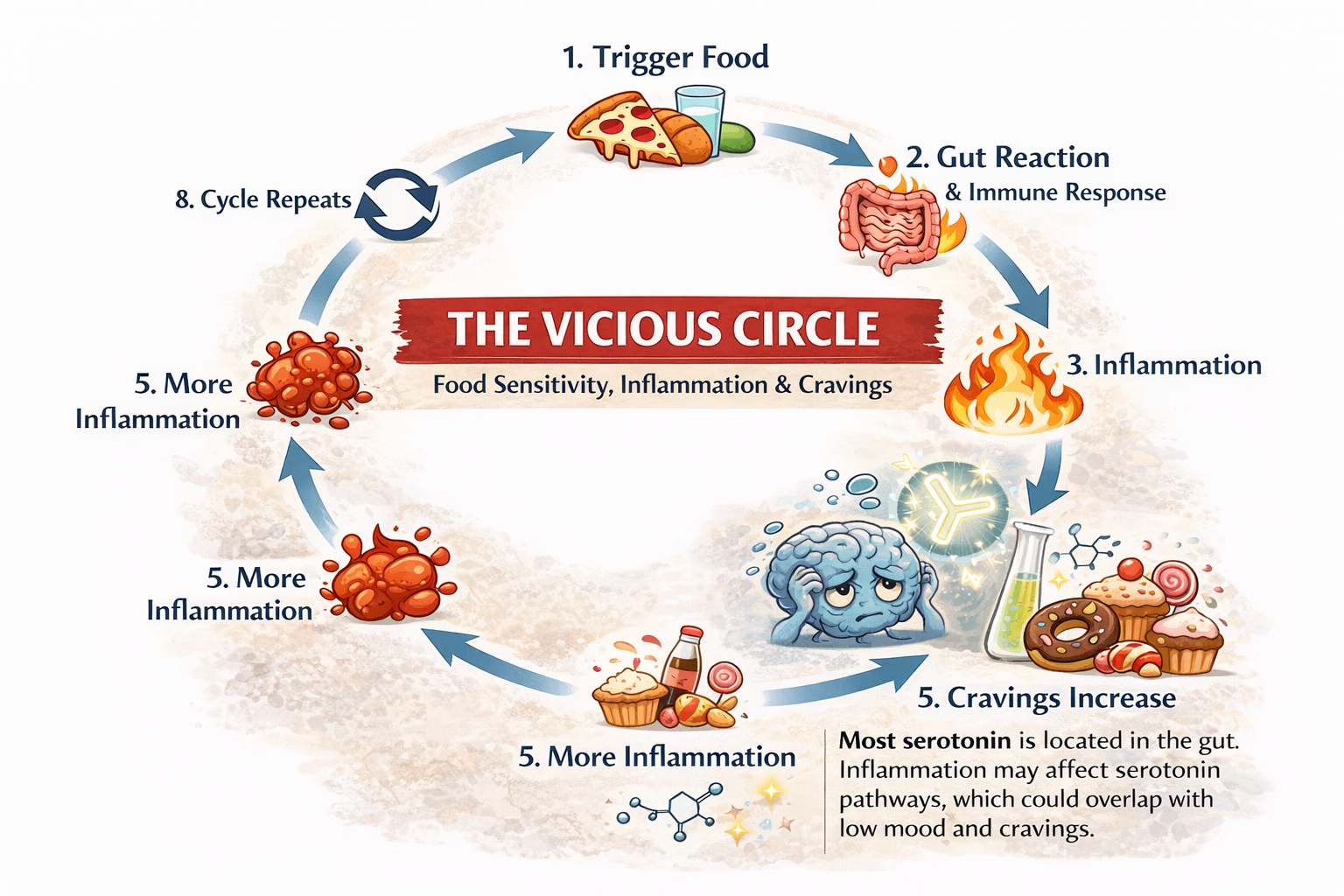
If you recognize this loop, testing may help you focus on the foods that show the strongest IgG signals in your report—so you can investigate patterns more strategically with professional guidance.
Related reads: Mood Swings & Food Intolerance and Sugar & Carb Cravings.
Many symptoms can overlap with food sensitivity. The most useful clue is a repeating pattern—especially when multiple systems are involved.
These symptoms can also have other causes. If symptoms are persistent, worsening, or unexplained, consult your healthcare professional.
Many people search for a list of “foods that cause weight gain.” The problem is that food sensitivity is highly individual. Any food can be a trigger for the right person, and delayed timing makes guessing unreliable.
The Pinnertest Food Sensitivity Test measures IgG antibody levels to 200+ foods. Results are not a diagnosis, but they may provide a useful data point to review alongside symptoms and clinician guidance.
Learn more: How IgG Food Sensitivity Testing Works and IgG vs IgE.
PINNERTEST IGG FOOD SENSITIVITY PANELS
All panels use the same CLIA-certified laboratory. Select the number of foods and level of online portal access that fits your needs.
Order your chosen panel, collect a quick at-home blood spot sample, mail it to our CLIA-certified lab, and receive your detailed IgG results by email in about 7 days.
NEW
120 Foods
$199
PDF Report
200 Foods
$249
Limited access to portal
(Online Report, Food Details, FAQ)
NEW
250 Foods
$349
Full access to portal
(Online Report, Food Details, Label Scanner,
Custom Recipe Generator, AI Assistant, FAQ)