
Chronic Fatigue & Food Intolerance: When Hidden Triggers Drain Your Energy
If you wake up exhausted, crash in the afternoon, or feel like your energy never fully “comes back,” food intolerance may be one piece of the puzzle. Many people report a delayed pattern, where symptoms show up well after a meal—making fatigue feel random.
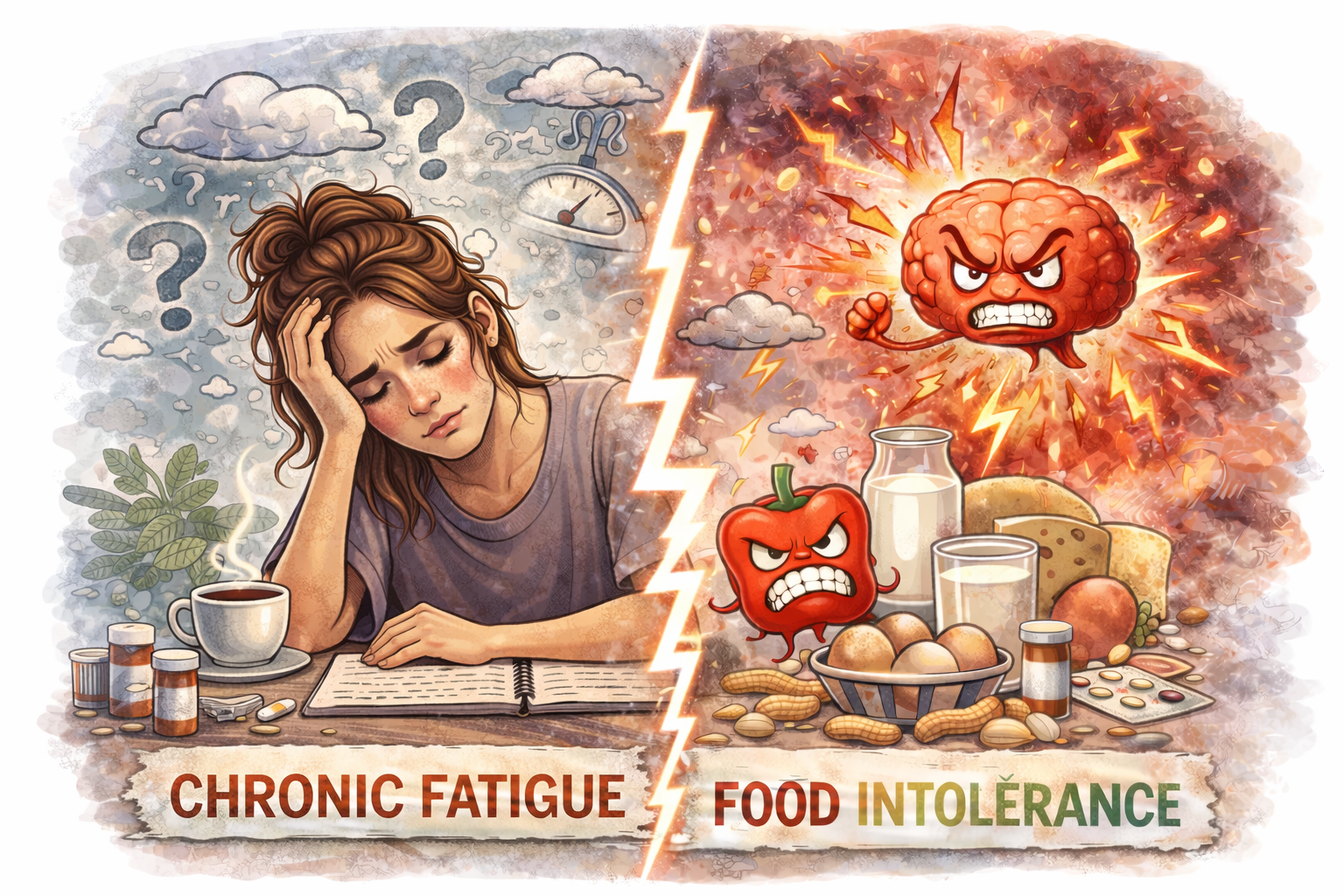
Delayed timing
Symptoms may appear 8–72 hours after eating.
Overlap
Fatigue can show up with brain fog, mood changes, and gut discomfort.
Key idea
There’s no universal trigger list—any food can be the problem.
What Does “Food-Related Fatigue” Mean?
Chronic fatigue isn’t just “being tired.” Many people describe it as low energy that persists even after sleep. When food intolerance is part of the picture, symptoms may follow a delayed immune pattern—so you might feel the impact well after the meal that contributed.
Important: There is no universal “fatigue trigger food” list. Any food can be the problem depending on the individual. That’s why testing can reduce guessing and narrow down your personal triggers.
Fatigue often overlaps with brain fog, mood changes, and digestive discomfort.
Gut Inflammation, Serotonin & Cravings
Food intolerance often involves the gut. When reactive foods repeatedly irritate the system, people may experience ongoing gut inflammation and digestive imbalance.
Key connection: over 90% of serotonin in the body is produced in the intestines. Serotonin influences mood, motivation, sleep quality, and appetite regulation.
When gut balance is disrupted, some people report lower mood (including depression-like symptoms), stronger cravings, and “reach-for-energy” eating—especially sugar and refined carbs. Learn more: Sugar & Carb Cravings.