
 NEW
NEW
Pinnertest 120
120 Foods
$199
PDF Report

Brain fog can feel like slow thinking, poor focus, forgetfulness, or low mental clarity. Some people report a delayed pattern where symptoms show up hours or even days after eating—making the cause hard to spot.
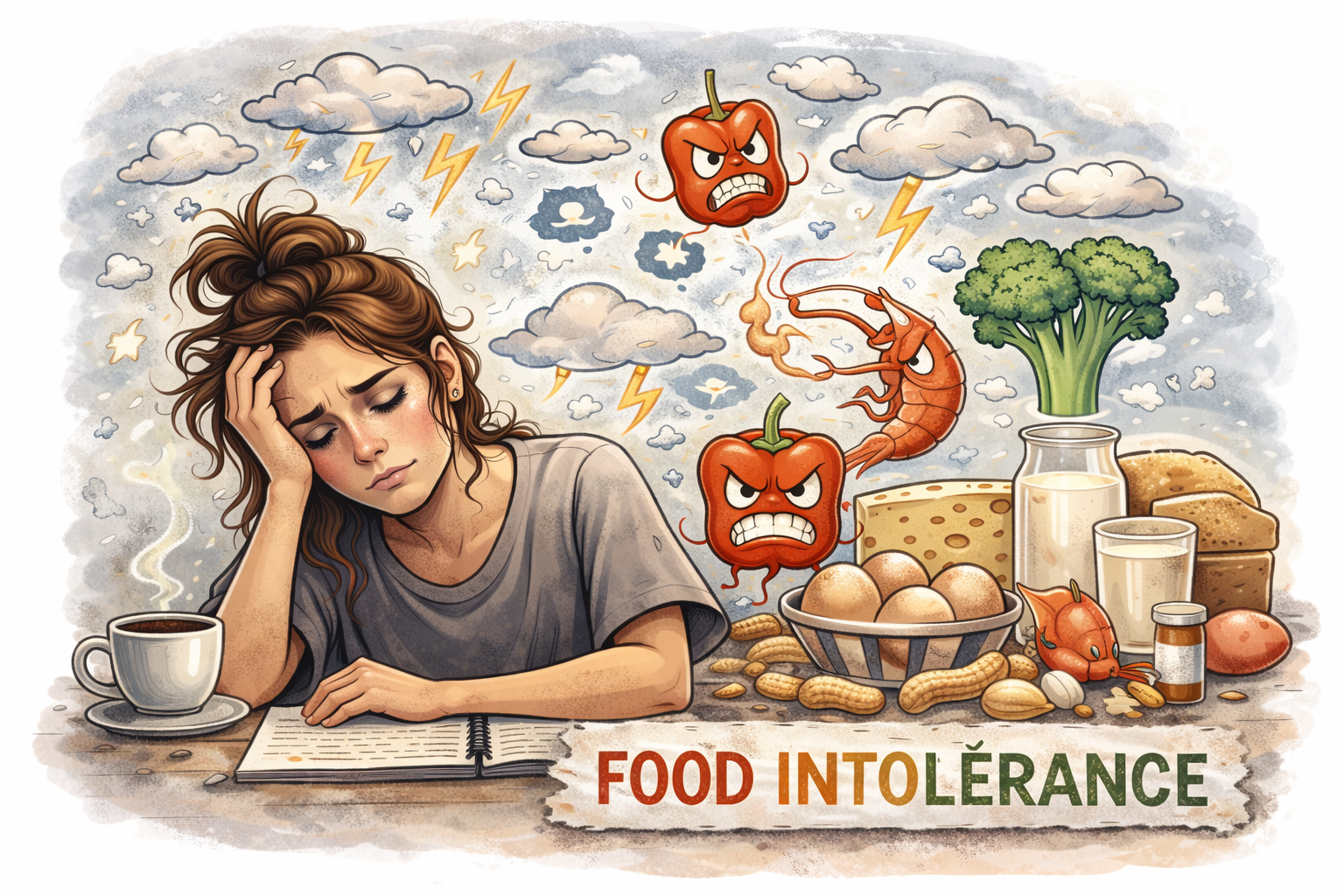
Delayed timing
Many people report a window of 8–72 hours.
Overlap
Brain fog can appear with fatigue, headaches, mood changes, and digestion.
Key idea
There’s no universal trigger list—your results matter most.
Brain fog is a non-medical term people use to describe reduced mental clarity—like your thoughts are “slower,” your focus is weaker, and even simple tasks take more effort. When food sensitivity is part of the picture, people often report a delayed immune pattern that can make symptoms feel inconsistent or hard to connect to a specific meal.
Important: Brain fog has many possible causes (sleep, stress, hormones, medications, nutrient deficiencies, and more). Persistent symptoms should be evaluated by a clinician.
Brain fog often overlaps with fatigue, headaches, and digestive discomfort.
Your gut and immune system are closely connected. When your body develops an IgG response to a food, some people report low-grade inflammation that can affect how they feel—physically and mentally. Because timing can be delayed, brain fog may show up long after the meal that contributed.
Symptoms may show up hours to days later, so triggers are hard to connect.
Some people report inflammation patterns that affect energy and clarity.
Repeated exposure can create overlapping symptoms that feel constant.
Brain fog can appear alone or alongside other symptoms. These overlaps are commonly discussed in food sensitivity contexts.
Feeling drained, heavy, or “not refreshed” even after sleep—especially with afternoon crashes.
Frequent headaches or pressure that clusters after meals or during periods of dietary inconsistency.
Irritability, anxiety-like feelings, or low mood that fluctuates and overlaps with other symptoms.
Fullness, gas, abdominal pressure, or irregular bowel movements that come and go.
Trouble falling asleep, waking up frequently, or sleep that doesn’t feel restorative.
Feeling pulled toward sugar or refined carbs—especially when energy is low or mood dips.
Because timing can be delayed and symptoms overlap, identifying triggers can be harder than it seems. These are practical ways people gather better information.
Track meals and note symptom timing (including the prior 1–3 days). This can clarify delayed patterns.
Simple • Requires consistencyBrain fog can have many causes. A clinician can rule out other conditions and guide next steps.
High-value • PersonalizedA blood test measuring IgG responses to 200+ foods can help reduce guessing and focus what to investigate with your provider.
Comprehensive • TargetedPINNERTEST IGG FOOD SENSITIVITY PANELS
All panels use the same CLIA-certified laboratory. Select the number of foods and level of online portal access that fits your needs.
Order your chosen panel, collect a quick at-home blood spot sample, mail it to our CLIA-certified lab, and receive your detailed IgG results by email in about 7 days.
NEW
120 Foods
$199
PDF Report
200 Foods
$249
Limited access to portal
(Online Report, Food Details, FAQ)
NEW
250 Foods
$349
Full access to portal
(Online Report, Food Details, Label Scanner,
Custom Recipe Generator, AI Assistant, FAQ)